Subway, also called underground electronic railway, is used to transport a large number of passengers to their desired destination. In Asian countries, aside from China, South Korea and Japan, 6 out of 11 countries have an existing or being built subway system. These are Singapore, Bangkok, Kuala Lumpur, Jakarta, Hanoi Metro, and soon to be in Manila.
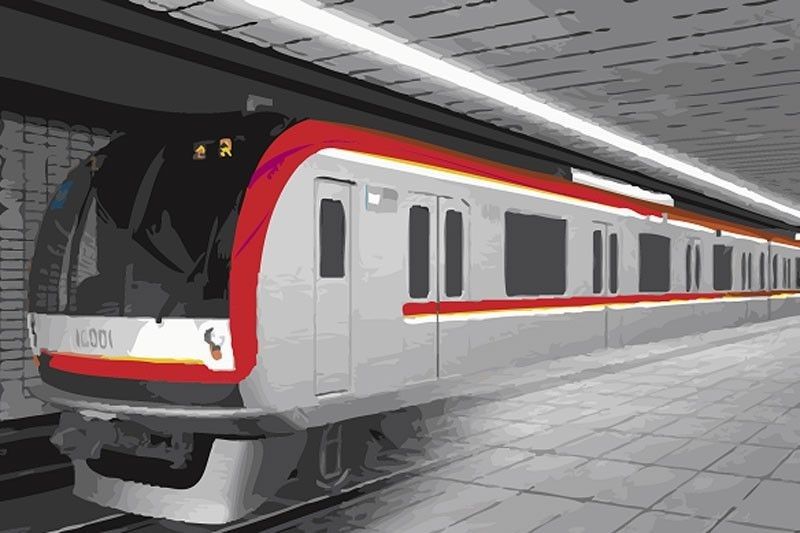
A news stating a joint infrastructure project of the Philippines and Japan Government on Mega Manila Subway, now called Metro Manila Subway Line 9, was announced by local TV networks and newspapers. According to the news, "A consortium of Japanese and Filipino firms has bagged the contract to design and build the first phase of the Metro Manila subway project, which will commence construction this week.The Department of Transportation (DOTr) said it has signed the design and build contract for the Metro Manila Subway’s first three stations, or its partial operability section, with the joint venture of Shimizu Corp., Fujita Corp., Takenaka Civil Engineering Co. Ltd. and EEI Corp. The joint venture will be in charge of designing and construction the subway’s partial operability section, which consists of its first three underground stations (Quirino Highway, Tandang Sora and North Avenue), tunnel structures, the Valenzuela depot, and the building and facilities for the Philippine Railway Institute. Partial operability of the subway with its first three stations is targeted for 2022, while full operations is eyed by 2025. In its first year of full operations alone, the rail system is expected to serve up to 370,000 passengers per day, with a capacity of serving up to 1.5 million passengers daily. Set to break ground this Wednesday, the P357-billion Metro Manila subway will not only be the Philippines’ first underground railway, but will also be one of its most expansive, spanning 36 kilometers with 15 stations, crossing seven local governments, and passing three of Metro Manila’s business districts, according to the DOTr. The 15 stations will run from Quirino Highway to NAIA Terminal 3 in Pasay City and FTI in Taguig. Meanwhile, the Philippines and Japan signed last week a grant agreement worth an estimated ¥1.2 billion for the train simulators of the Philippine Railways Institute. JICA and the Philippine government in March last year signed a ¥104.53-billion (about P51.34 billion) loan agreement for the construction of the first phase of the Metro Manila subway project."
I can say that a lot of Filipinos especially daily commuters will benefit from this project. Based on my observation, a large percentage, say at roughly, 50% of daily commuters opted to use light railway/train, such as MRT and LRT as their day-to-day means of transport. While 30% and 20% were commuters of buses and jeepneys or other transportation respectively. Though at first, there will be inconvenience during its construction, but there is nothing compared to the long-lasting comfort this project will bring to the people once its completed and operational. By having this Manila Subway, it will ease up traffic congestion and difficulties in commuting since this will serve over 350,000 people as compared to MRT and LRT, which can only serve half of this people. Trains and barges of the subway system are also Japanese made that have safety and life-saving features for earthquake. With this, people will choose this as their primary means of transport instead of buses and jeepneys due to its speed, security and traffic free aspect.
Source:
